
A group of experts has voiced significant concerns regarding India's ethanol-blended fuel policy, citing potential negative impacts on land-use, agriculture patterns, food security, groundwater levels, and household incomes. They recommend a return to E10 fuel and a review of the policy's overall benefits versus costs to consumers and the environment.

'The ethanol blended with petrol programme should not be halted or reconsidered.' 'India is not experiencing a structural sugar shortage, and the ethanol blending roadmap does not compete with food security or drive domestic price increases.'

'As long as the vehicle has a flex engine, it is irrelevant if the mixture is 15 per cent or 30 per cent; the performance is the same.'

The Congress party has accused Union Minister Nitin Gadkari of conflict of interest, alleging his sons' companies have benefited from the government's ethanol blending policy. The BJP has rejected the allegations.

The Supreme Court rejected a PIL challenging the nationwide rollout of 20% ethanol-blended petrol (EBP-20), citing benefits to sugarcane farmers. The plea alleged incompatibility issues with older vehicles.
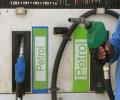
'The E20 usage accrues the huge benefit to the nation, to the society, to the farmer, to the environment, to the exchequer and all of us'

The ministry stated that for vehicles designed for E10 and calibrated for E20, mileage may drop by just 1-2 per cent, while in other vehicles, it could be around 3-6 per cent.
The Supreme Court is set to hear a petition seeking mandatory and uniform labelling of ethanol percentage at petrol pumps and a public database on vehicle compatibility with ethanol-blended fuel. The plea also calls for an expert committee to assess the impact of E20 fuel on vehicles, environment, and food security, and a consumer disclosure protocol.

The Supreme Court has dismissed a Public Interest Litigation (PIL) seeking mandatory and uniform labelling of ethanol percentage in petrol at fuel pumps. The petitioner, Narendra Kumar Goswami, was advised to approach the jurisdictional high court for relief, with the Attorney General arguing it was a proxy litigation.

The mandatory 10 per cent ethanol blending in petrol may not happen for the existing 101 million vehicles on the Indian roads without introducing technical changes in them. The central government plans to make 10 per cent blending compulsory from October from the current 5 per cent. Existing vehicles are not capable of running on 10 per cent ethanol-blended petrol as ethanol releases more heat and can corrode vehicle engines, experts say. It will lead to a 3% drop in mileage.

Use of 10 per cent ethanol-blended petrol has led to a saving of over Rs 41,000 crore in the foreign exchange for the country, minister of state for environment, forest and climate change Ashwini Kumar Choubey said on Wednesday. Speaking at an online event of auto industry body SIAM on sustainable mobility, the minister said the government is working in multiple ways to encourage sustainable mobility. "India recently achieved 10 per cent ethanol blending target 5 months in advance, saving over Rs 41,000 crore worth of fuel imports for the nation," Choubey noted.

The limited availability of flexible (flex)-fuel vehicles in the Indian market and the slow rollout of ethanol-blended petrol by oil-marketing companies (OMCs) remain major obstacles to achieving widespread use of biofuels in the transportation sector in India. Recently, two Union ministers have emphasised India's biofuel potential, arguing that it has the capacity and potential to lead a transition towards widespread biofuel adoption. Road Transport Minister Nitin Gadkari signalled that this transition is well underway and urged car manufacturers to quickly adapt and introduce new biofuel-run vehicles, lest the government resort to taxing diesel vehicles.

Maruti Suzuki India Ltd has launched the Wagon R, India's first flex-fuel car, capable of running on any blend of ethanol and petrol from E20 to E100, aligning with national energy security and sustainability goals.

BJP MP Janardan Mishra has strongly defended the Centre's ethanol blending policy amidst ongoing controversy, highlighting India's high crude oil import dependency and global geopolitical challenges. He questioned opponents of ethanol blending, citing Brazil's successful use of 100 per cent ethanol in vehicles and experts' views on its engine compatibility.
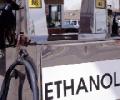
Ethanol blending with petrol has resumed after more than a year. Last week, sale of blended petrol started in Bangalore, Mathura and parts of Gujarat. While blending will be gradually extended to the other parts of the country, the quantity of ethanol contracted so far is insufficient to continue the programme nationally beyond eight months.

A government adviser has called for India to reintroduce a petrol variant with a lower ethanol blend, such as E10, alongside the current E20 fuel. This move aims to protect millions of older vehicles, particularly two-wheelers, which may experience performance issues and damage from the higher 20 per cent ethanol blend.

Prime Minister Narendra Modi on Saturday said the target date for achieving 20 per cent ethanol-blending with petrol has been advanced by five years to 2025 to cut pollution and reduce import dependence.
The ethanol blended with petrol needs to be of 99.99 per cent purity.

Why the industry's public position changed is difficult to say. What the developments did establish, though, is that ethanol-blended petrol has become one of the country's most politically and commercially sensitive policy issues.

The Indian government has dismissed concerns that the use of E20 fuel could affect the validity of vehicle insurance policies, stating that the ethanol blending programme remains safe, consumer-friendly, and economically beneficial.
While the 5 per cent ethanol blended petrol programme has missed three deadlines
It, however, conceded that 20 per cent blending of ethanol with petrol leads to 3-5 per cent lower mileage in vehicles than conventional petrol, but said the blend offers a significantly higher octane rating, superior anti-knock properties, faster combustion, better pickup, smoother acceleration, and cleaner engine operation.
The Indian government has defended its E20 ethanol blending programme, stating that extensive testing and field experience show no evidence of abnormal engine wear, corrosion, or reduced vehicle life, despite a potential 2-6% reduction in fuel economy.

A new digital political phenomenon, the 'E20 Janta Party', is gaining traction on Instagram, mobilising Gen Z against the government's mandatory 20% ethanol-blended petrol (E20) and demanding Union Minister Nitin Gadkari's resignation.

The Aam Aadmi Party, led by Arvind Kejriwal, staged a protest in New Delhi against the government's E20 petrol policy, attempting to march to the Prime Minister's residence with over 2.30 lakh petitions from vehicle owners concerned about the ethanol-blended fuel.
The Indian government has allocated an additional 2 million tonnes of surplus broken rice from FCI stocks for its ethanol blending programme, while simultaneously issuing a detailed rebuttal to widespread misinformation regarding the E20 fuel, addressing concerns from water consumption to engine damage and environmental impact.

Researchers at IIT Kanpur have found that 20 per cent ethanol-blended petrol (E20) does not significantly reduce fuel efficiency or harm vehicle engines, contradicting social media claims and providing reassurance amidst its nationwide rollout. The study supports the Oil Ministry's stance on E20's benefits.

AAP chief Arvind Kejriwal is leading a march to the Prime Minister's residence to submit a petition with two lakh signatures against E20 petrol. He is demanding consumer choice, lower E20 prices, and transparency regarding studies supporting the fuel. The government defends the E20 programme, citing energy security and no evidence of vehicle harm.

The Bombay High Court has ordered major social media platforms, including Meta, X Corp, and Google LLC, to immediately remove 'vile, abusive, obscene, and defamatory' deepfakes and AI-generated content targeting Union Minister Nitin Gadkari, emphasising the urgent need for online platforms to curb malicious digital content.

Union Minister Nitin Gadkari has filed a civil suit against Meta, X Corp, Google LLC, and unknown persons in the Bombay High Court over "defamatory" deepfakes and AI-generated posts concerning the ethanol policy. The court will hear the matter on August 5, with Gadkari seeking a permanent injunction and immediate takedown of the fake content, which he claims has harmed his reputation.
To curb petrol import costs, the NDA government is pushing for a 10% ethanol mix in petrol

Flex fuel motorcycles can deliver "3 per cent higher torque and 7 per cent higher peak power".

"There is a sharp jump that we have seen in bookings of EVs... The jump, at least in our case, in just two months, it is about 2 to 2.5 times of what it used to be"

Madhya Pradesh Minister Kailash Vijayvargiya has ignited a political firestorm with his controversial remarks suggesting sugar should be "very expensive" and avoided by those over 40, drawing sharp criticism from the opposition amidst rising inflation concerns.

Maruti Suzuki Chairman R C Bhargava is pushing for increased government incentives for biogas-powered vehicles over hybrids, emphasising their net-zero carbon emissions and the valuable organic manure they produce, while also advocating for continued GST benefits for electric vehicles.

Union Minister Nitin Gadkari has received permission from the Bombay High Court to file a civil suit against Meta Platforms, X Corp, Google LLC, and other unknown entities for allegedly circulating 'defamatory' deepfakes and AI-generated content against him.

'With factories starting early for the next season, fresh sugar will enter market 10-15 days earlier than usual, and sugar price are expected to remain affordable in near term.'

The Indian government is actively developing a policy for flex-fuel vehicle adoption and aiming for 100 per cent ethanol blending in petrol to enhance energy self-reliance, particularly in light of supply disruptions from the West Asia conflict.

A Parliamentary Standing Committee on Commerce has urged the Indian government to swiftly conclude the proposed India-US Bilateral Trade Agreement (BTA), while ensuring India's interests are protected, recommending complete exemption for key export products like generic medicines and smartphones from future US tariff increases.
India's ambitious programme to cut oil import dependence by mixing ethanol in petrol has reached the national capital, with Vice President Bhairon Singh Shekhawat formally launching the environment friendly fuel on Tuesday.
